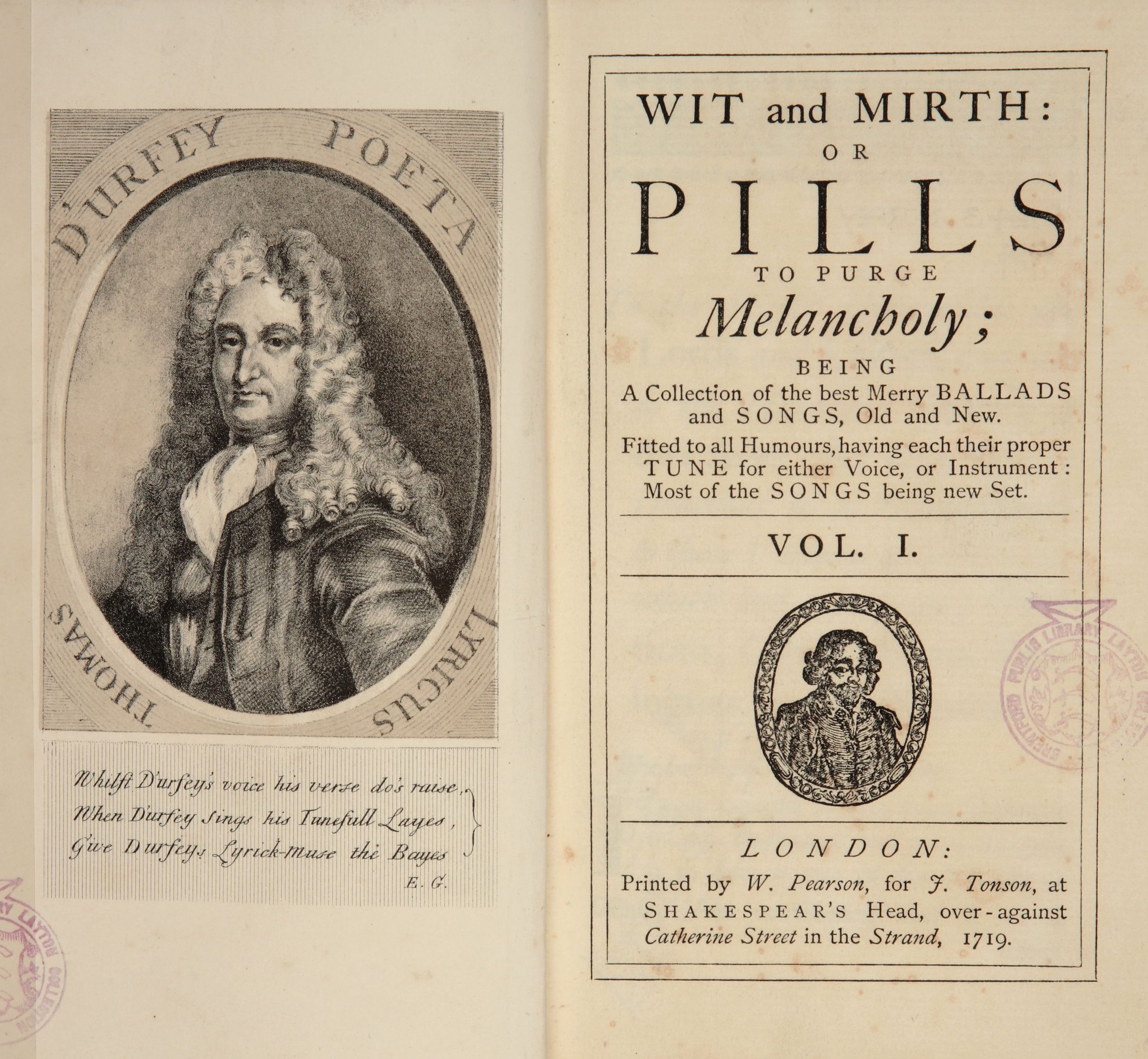
Wit and Mirth
The vibrant, contrasting world of late 17th-century English instrumental music.

A small pill against
melancholy.
The English instrumental music of the late 17th century could be
characterised as a mosaic of different, often contradictory, sounds.
The long tradition of contrapuntal music from the Elizabethan period
is unexpectedly combined with the traditional music of the place:
lively country dances as found in Playford’s collections, songs and
variations on Scottish and Irish folk tunes.
Music written for the virtuoso violinists of the time includes not only
intricate sonatas but also pieces rooted in popular and folk idioms.
The divide between elite and lower-class music was less pronounced
than it seems today, and performing these works together offers
both historical coherence and a vivid portrait of Early Modern
England’s rich musical heritage.
In this spirit, Nocturnalia Ensemble will perform 17th-century folk
tunes preserved by John Playford, a rarely heard trio sonata by
Gottfried Finger, a German composer active in London, and present
the world premiere of a violin sonata by William Viner, not performed
since the early 18th century. Alongside the refined music of Purcell,
Locke, and Matteis these works reveal a lively dialogue between art
music and the dance traditions of the time.
The title of this programme, Wit and Mirth, or Pills to Purge
Melancholy (1698), borrows from Thomas D’Urfey’s popular song
collection, a witty and irreverent antidote to gloom in troubled times.
In the same spirit, let this concert serve as a small pill against
melancholy.
John Playford
John Come Kiss Me Now
Duke of Norfolk
Scotch Tune from Wit and Mirth Collection
(1698)
William Viner
Violin Sonata
Henry Purcell
New Ground and Hornpipe
Sonata, Z.780
Gottfried Finger
Trio Sonata op 1 no 3
Matthew Locke
Suite in D minor (For several Friends)
Nicola Matteis
Preludio; Passaggio rotto;
Scaramuccia (from Ayres for the Violin)
Christopher Simpson Prelude and Divisions
upon a Ground